

Google Removes &num=100 parameter: What Does It Mean for Your Website’s SEO?
SEARCH ENGINE OPTIMIZATION
9/20/20253 分钟阅读
If you manage a business website or track your digital marketing results, you might have noticed some unusual changes in your search impressions and average ranking this fall. In mid-September 2025, Google quietly removed the “&num=100” parameter from its search results - a move with surprising consequences for anyone using SEO tools or monitoring their site’s performance.
What Was &num=100, and Why Did It Matter?
For years, advanced users and SEO professionals relied on a special shortcut in Google’s search URLs, “&num=100,” to view up to 100 results on a single page instead of the standard 10. This behind-the-scenes trick enables reporting tools and rank trackers to scan deeper into Google’s results, providing visibility into where your website ranked - even if it was appearing on page 8 or 10 for certain searches.
In mid-September, Google disabled support for this parameter. Now, searches default to only 10 results per page, and SEO tools must jump through more hoops (and spend more resources) to access rankings beyond the first handful of pages. This change means it’s now harder - and sometimes more expensive - for trackers to see a full list of your site’s keyword positions, especially those in later positions.
What Changed in September 2025?
Why Did Google Remove It?
Google hasn’t issued an official statement, but experts suggest the move comes down to two factors:
Reducing server loads and scraping: Bulk requests with “&num=100” made it easier for bots and tools to scrape large amounts of data, putting pressure on Google’s systems.
Aligning with new search experiences: Google has been rolling out infinite scroll and other changes, especially on mobile, making the old paginated results obsolete.
How Does This Affect Your Website?
You may have seen a dramatic drop in impressions or a sudden boost in your reported average ranking inside Google Search Console or other SEO tools. Here’s what’s really happening:
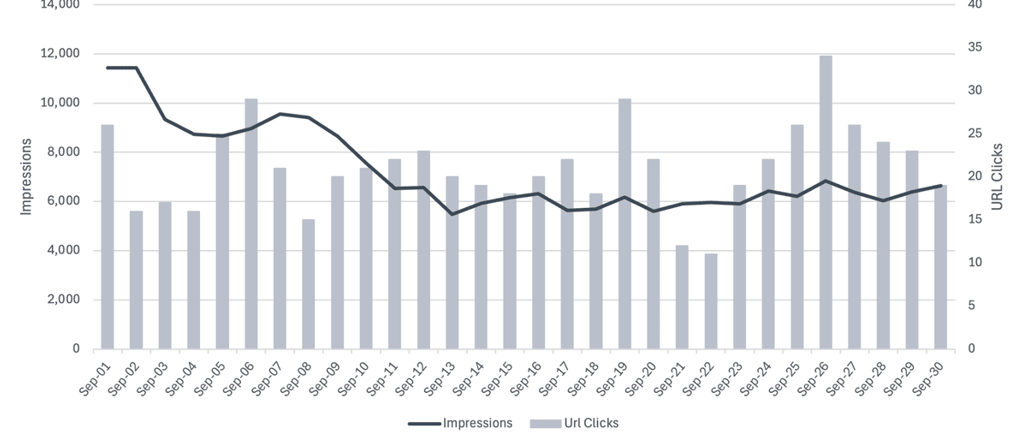
Impression counts have dropped: Recent analyses show that up to 87.7% of sites saw a decline in impressions immediately after the change. That’s because deep-page rankings that were previously logged as “impressions” by bots (not by real users) are now invisible to tools.
Average position looks better: With those low rankings removed, the average position for your site may jump up, but this doesn’t mean you’re actually ranking higher for users.
Less visibility for long-tail keywords: Sites lost visibility for up to 77.6% of unique terms, especially keywords that previously ranked beyond the first 2 or 3 pages.
Here’s one of the examples from our client (a US hotel) in September 2025, a significant drop in impressions before Sep 11th, while URL clicks remained stable.
No need to panic! This change mostly affects how SEO professionals and reporting tools gather data - not how real customers find your business. The decrease in impressions isn’t a loss of actual visibility; it’s a correction to how results beyond page 2 were being counted. The people who matter - your potential customers - still see you in Google as usual.
Should You Be Worried?
What Can You Do?
Moving Forward
Focus on high-impact keywords: With less data noise from deep rankings, you can prioritize the keywords that drive real traffic and conversions.
Talk with your SEO partner: Ask your digital marketing team how they are adapting tracking and reporting for this update - most leading tools are already updating their processes.
Watch for deeper insights: Expect more accurate reports, even if totals look different.
Change is constant when it comes to Google and SEO. This update may make your data look different, but it brings more clarity to what’s really working for your business. Stay focused on your core strategies, keep creating useful content, and let real customers - not bots - be your guide for success.
If you’re ready to navigate these changes with confidence and ensure your website stays ahead in search rankings, don’t hesitate to reach out. Our expert SEO team is here to help you develop adaptive strategies, optimize your site, and keep your digital presence strong - even as Google evolves. Contact us today for a personalized SEO consultation and take the next step toward sustained online success!